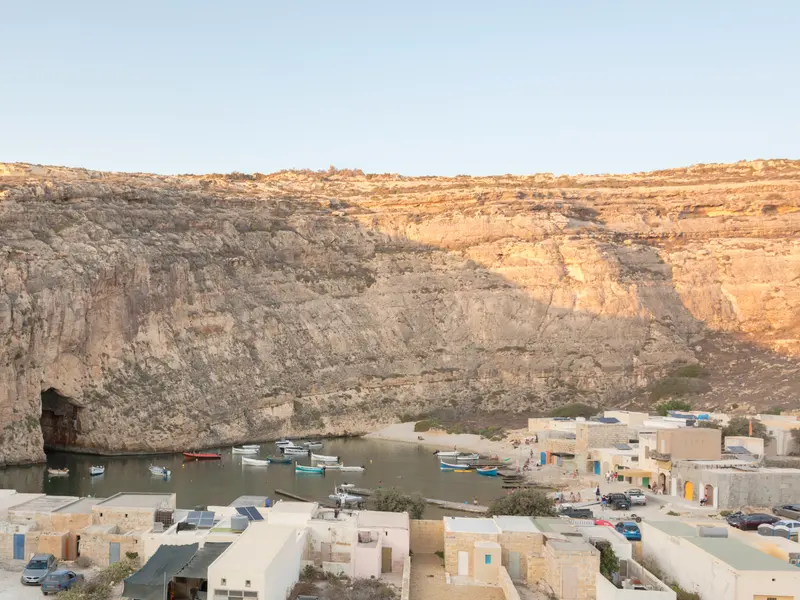
The Dwejra Inland Sea is a small natural lagoon on Gozo, cut off from the open water by cliffs and linked to the Mediterranean through a narrow natural arch. It is a place to swim in shelter, ride a boat through the arch on calm days, and, for divers, follow the tunnel out to blue water.
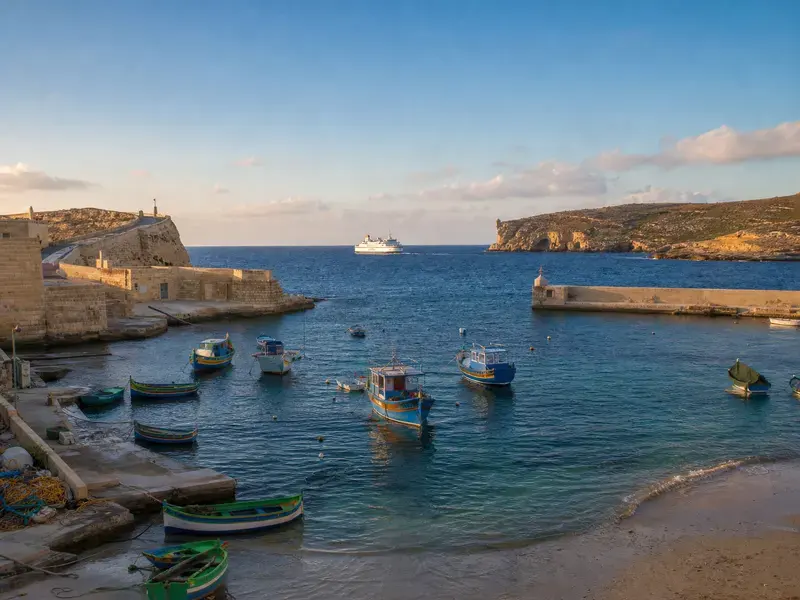
How good your visit is depends on the sea state. On calm days skippers thread their boats through the gap and run short tours to the headland. When swell pushes in, departures pause and you will see boats often pulled up on beach, the bows resting on pebbles while everyone waits for the wind to settle. If you want an easy swim and a picture of the archway from the inside, arrive in the morning before queues build and the day heats up.
This lagoon sits on Gozo, Malta, in the Dwejra area, part of the Mediterranean Sea. Locals call the basin Il-Qawra, and you will also hear the wider headland simply called Dwejra. It pairs naturally with other west‑coast stops on a Gozo day trip, and if you are crossing from Malta, see our notes on travel to Gozo by sea.
The link to the open sea is the entire trick here. Inside the cliffs the water is flat and green, then the rock pinches into a tunnel where boats can pass through tunnel (on calm days). Out beyond the arch the seabed drops away, the colour turns cobalt, and even from the boat you feel the lift of open‑sea swell. Skippers typically steer past Fungus Rock; site of former Azure Window (boats take visitors through the archway for tours mainly to these sites), looping back to re‑enter the calm of the lagoon.
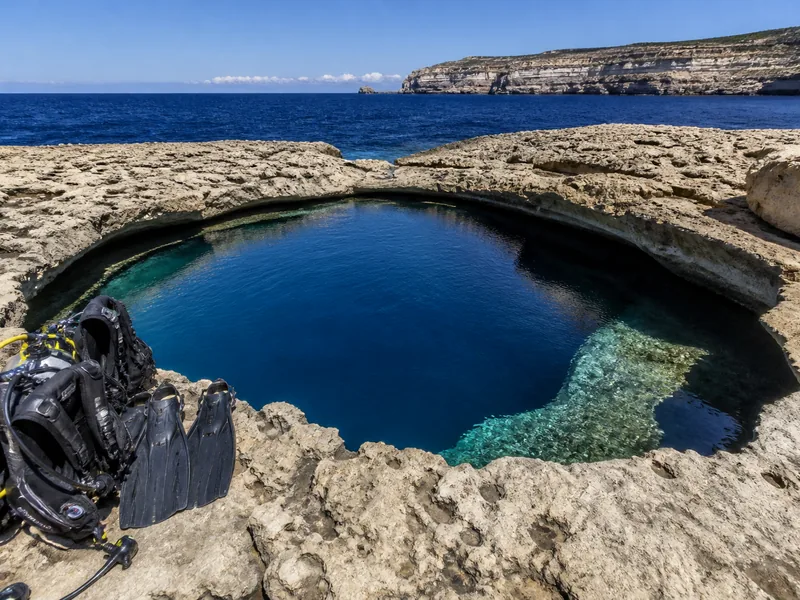
For swimmers the Inland Sea is friendly but not sandy. The shore is a gently shelving stony beach and underfoot the lagoon bottom is pebbles and rocks (fairly shallow). The average depth inside is 2 metres (6.6 ft) near the middle, so you can float and watch the boats come and go without straying far. Divers get a very different profile under the cliff: the floor drops to a max depth inside of 26 metres (85 ft), then after the tunnel you meet blue water and a wall that runs down to up to 35 metres on the outside (after exiting the tunnel).
Geologically, this pocket of water feels like an accident the island decided to keep. The most likely story is a sea cave roof collapse (probably (along a geological fault)), which left a circular basin connected to the coast only by the surviving arch. However it happened, the result is a lagoon that reads like a harbour but breathes the same tide and swell as the coast outside.
Boats are part of the rhythm of the place. When conditions allow, you board right from the shingle and skim out through the arch to see Fungus Rock and the site where the Azure Window once stood. When the weather is up, the fleet sits idle on the stones, hulls propped and nets drying, and the whole cove feels like a fishing hamlet taking a day off. If you prefer your coastal arches without engines, head for the quieter swims at Wied il Ghasri or the broad sands of Ramla Bay instead.
For divers this is one of Malta’s classic shore entries. You fin the length of the tunnel, turn right to follow the wall, and come back with the light behind you, sometimes in company with glassfish and bream schooling in the shaft. It pops up often in lists of Malta’s best, not least for the lore around Jacques Cousteau top ten dives (reported). Gozo and Malta have over 120 dive sites, so you can fill a week mixing this with the Blue Hole Gozo, the steel of the Um el Faroud, or a mainland day at Cirkewwa diving.
The shoreline itself is as interesting as the water. Along the inside edge stand several fishermen's huts, doors painted against the sun and salt, with traditional Maltese fishing boats, luzzijiet, tied up in front. On a good day you will see a couple of these join the tour boats, painted eyes on the prow watching the gap as they time their run through the arch.
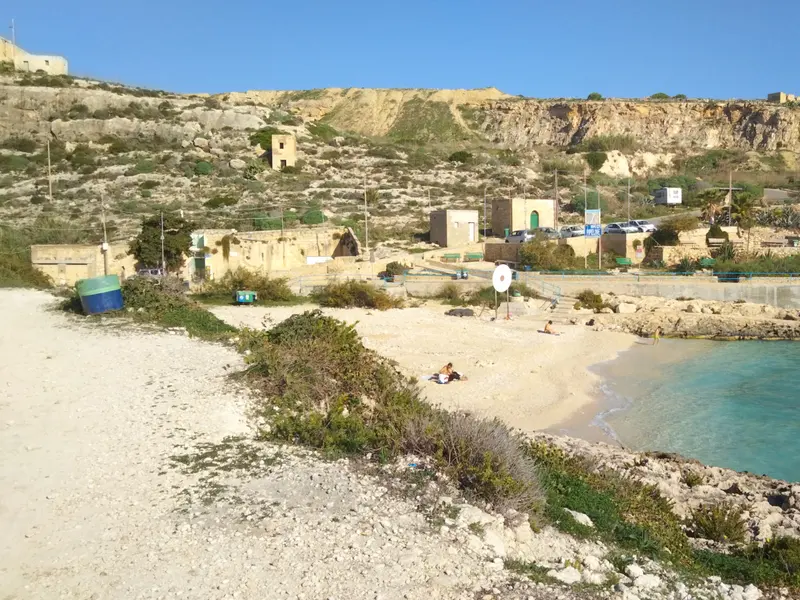
What people get wrong here is simple expectation. It is not a sandy cove and the stones can be sharp, so bring water shoes if you plan to wade. Boat trips are not guaranteed, because the tunnel faces the open sea and even a modest swell can bring a surge that closes it for hours. And while tours still swing by the spot where the Azure Window once stood, what you see now is the profile of the headland and the sea below it, not a free‑standing arch. If you want a sure‑thing coastal view in any weather, choose an inland walk and the cliffs at Dingli cliffs, and save Dwejra for a calm day.
If you are stitching a wider day around Dwejra, the Inland Sea is a good first stop while the water is quiet, then move on to a late swim at San Blas Bay or a look at Comino’s coves from a boat, the Blue Lagoon Comino and the Crystal Lagoon, when the light drops and the crowds thin.
Common questions
Do boat tours run year round?
Yes, but only when the sea outside the arch is calm enough for skippers to operate safely. In winter and on windy days you may find boats often pulled up on beach and no departures through the arch.
Is it good for a relaxed swim?
Yes, the lagoon is sheltered and the beach is a gently shelving stony beach. Water clarity varies with recent swell and boat traffic, so mornings are best if you want a quiet dip.
Can beginners dive the tunnel?
Local centres take qualified divers through the tunnel in suitable conditions. Expect low light, surge if there is swell outside, and depth increasing fast after you exit to the open sea, up to 35 metres on the outside (after exiting the tunnel).
Last checked: 14 November 2026. Prices, opening hours and timetables change, verify anything time-sensitive before you travel. Photo: Diego Delso, CC BY-SA 4.0.