How to pick a beach in Malta
The reasoning behind the site's top 10, moved off the homepage so it has room to argue its case properly: what the ranking actually weighs, why a rock platform regularly beats a sand beach on these islands, and why the wind decides more of a beach day than any list can.
How we ranked the top 10
Every list like this one is really an argument about what the word best is doing, and almost none of them say. Here is ours in advance, so you can disagree with the order rather than guess at it. Six things decided it: how clear and how deep the sea is, how easy the entry and the climb back out are, whether anything on the shore will shade you, how many people are likely to be there already, how far a swimmer can actually swim, and how much work the place costs to reach. Effort counts against a beach, but only lightly, because the walk happens once and the swim lasts the afternoon.
That produces an order with some awkward consequences, so take them now rather than at number seven. The water everybody photographs is not first. The biggest sand beach is seventh. Two of the top five want a ferry before anything else and one of those wants a descent after it. And if you are coming with a toddler rather than to swim lengths, this ranking is not written for you: start at seven and read upward. Where a beach has its own guide, the name is the link to it.
The ranking in full
The order below is the argument above applied, with the reasoning attached to each place. If you would rather see the same ten as a countdown, largest photograph first, that lives on the top 10, ranked.
-
01
Ramla Bay, Gozo
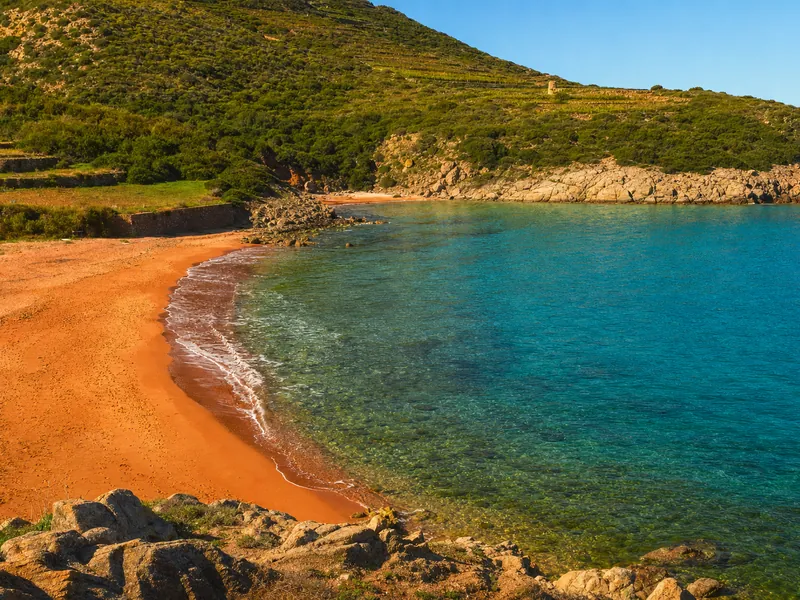
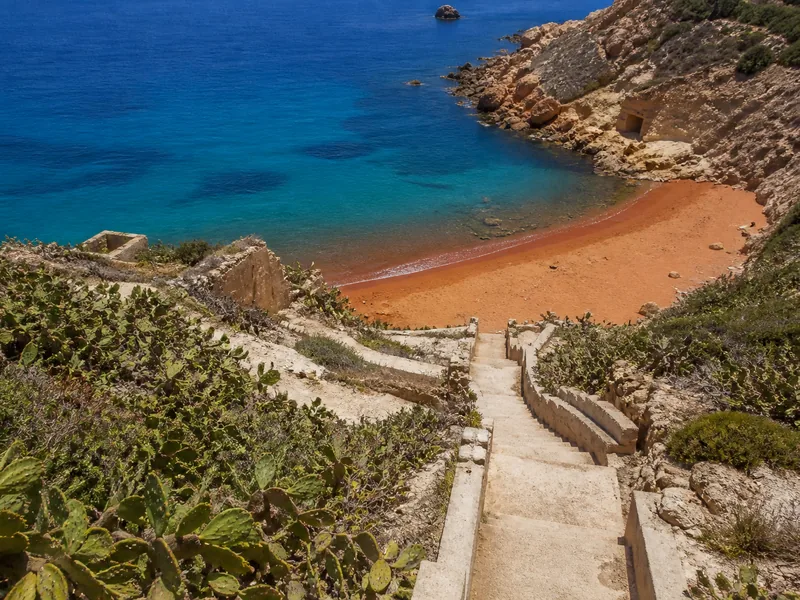
First because it wins on more of the six than anything else and loses badly on none of them. The sand is soft and genuinely red, the entry is gradual enough that a weak swimmer never finds themselves out of their depth by accident, and the ferry sitting between you and it does the work a turnstile would have to do anywhere closer. Nothing else here pairs water this good with a crowd this survivable.
-
02
Golden Bay and Għajn Tuffieħa
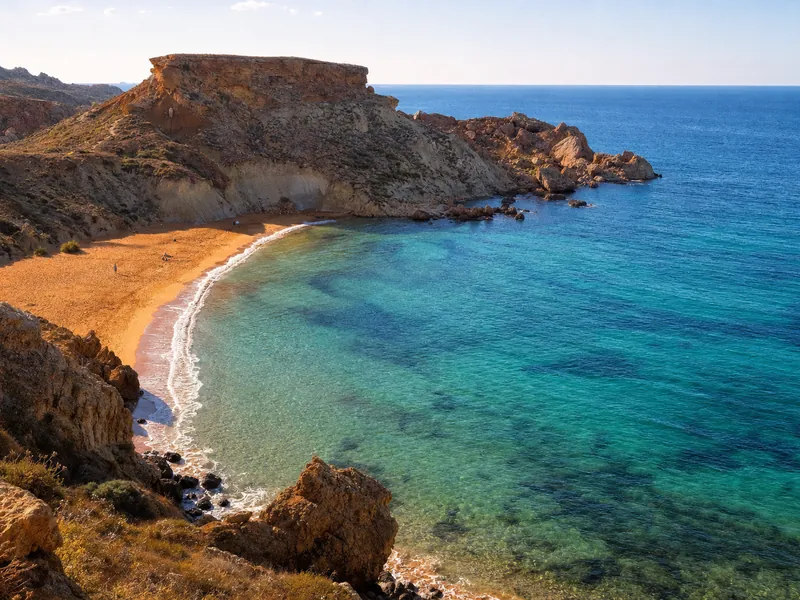
Two beaches, one headland, and a decision you make at the top of the path. Golden Bay hands you real sand and a slope you can walk down into the water. Għajn Tuffieħa next door reaches the same sea, but only after a long stair descent, and that descent is the sole reason it holds fewer people. Second, because nowhere else in Malta lets you trade effort for space quite so directly, and because you get to choose which side of that trade you are on after you have parked.
-
03
Blue Lagoon, Comino
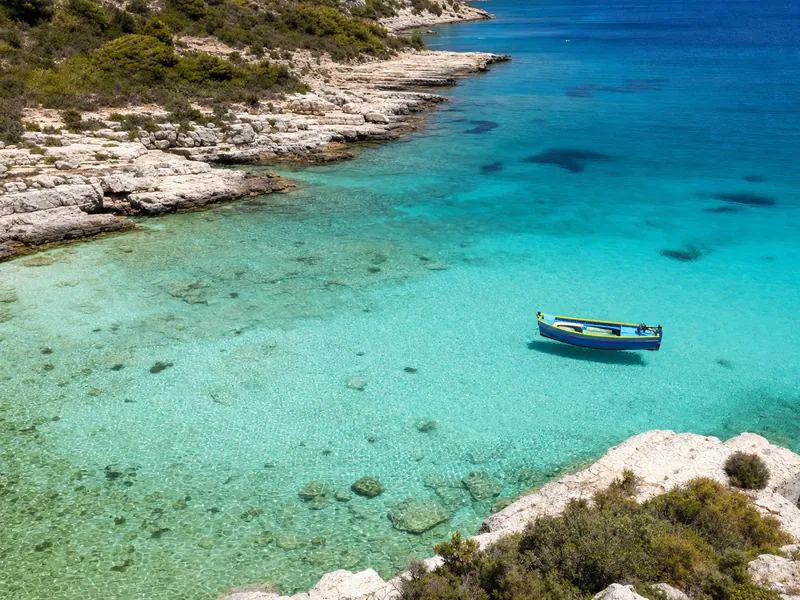
The clearest water on the list, and the only entry where the hour of the day decides whether it belongs at one or at nine. Shallow, startlingly bright sea over sand, in the channel dividing Comino from Cominotto, which every boat in the country is pointed at by mid-morning. Our own note on timing is May, June or September, and early. Ignore it and you have bought a ticket to swim in a car park.
-
04
St Peter's Pool
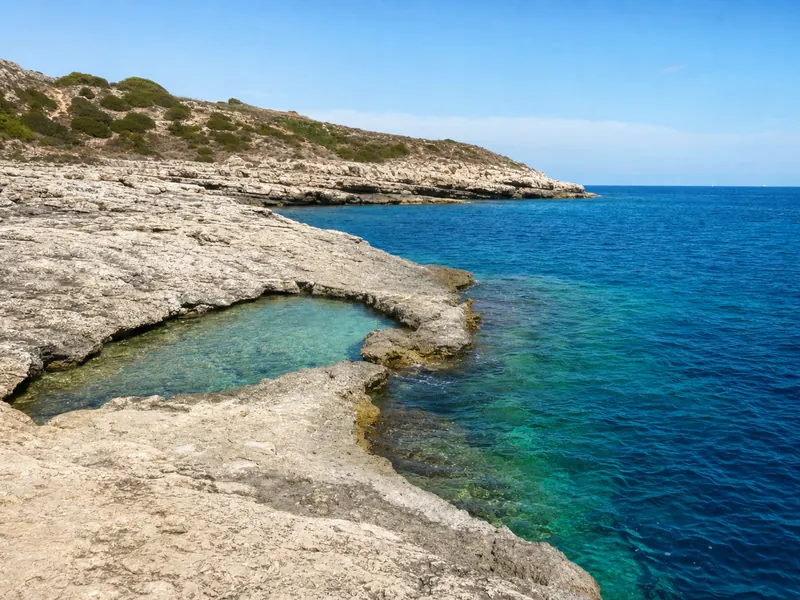
The best swim here with no sand in it anywhere. You get into deep, clear water inside a bowl of rock, down the stone or straight off the edge, and the absence of a shelf is exactly why it stays clear on a day when a sand bay an hour away has gone milky. Two conditions ride along: it suits confident swimmers only, and our own note on it reads calm days only. Nothing is provided out there, so arrive carrying whatever you will need.
-
05
San Blas Bay, Gozo
Ramla's water served in a smaller glass. The same red sand, the same easy entry once you are down at sea level, with a steep descent doing the filtering that the ferry does further along the coast. It sits one place lower for a single reason: the climb back out rules out a share of the people the beach itself would suit perfectly.
-
06
Crystal Lagoon, Comino
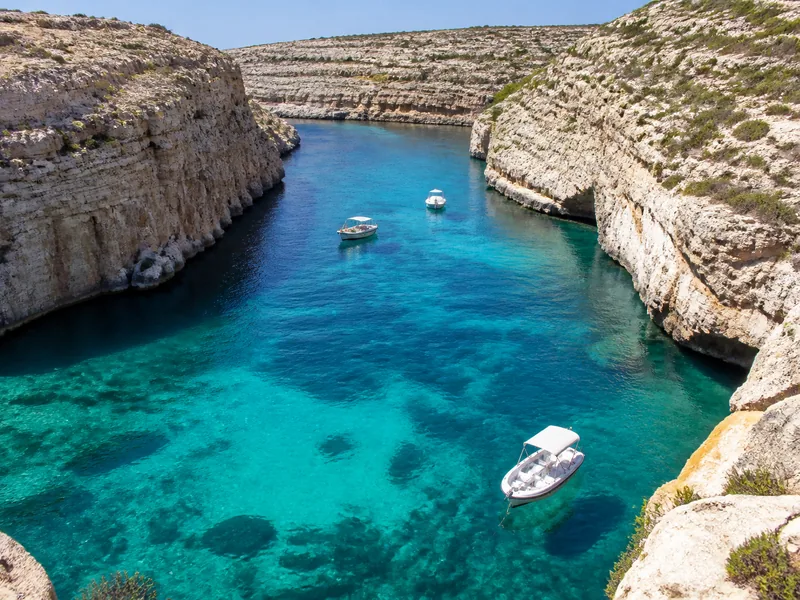
A better swim than its famous neighbour, and hardly anybody will say so out loud. It runs deeper, there is no beach to stand on, and you get in off rock or off the boat that carried you, so the paddling crowd never turns up. You can only reach it by water. Sixth rather than higher because nowhere to stand is a genuine limitation and not a badge of honour.
-
07
Mellieħa Bay, or Għadira
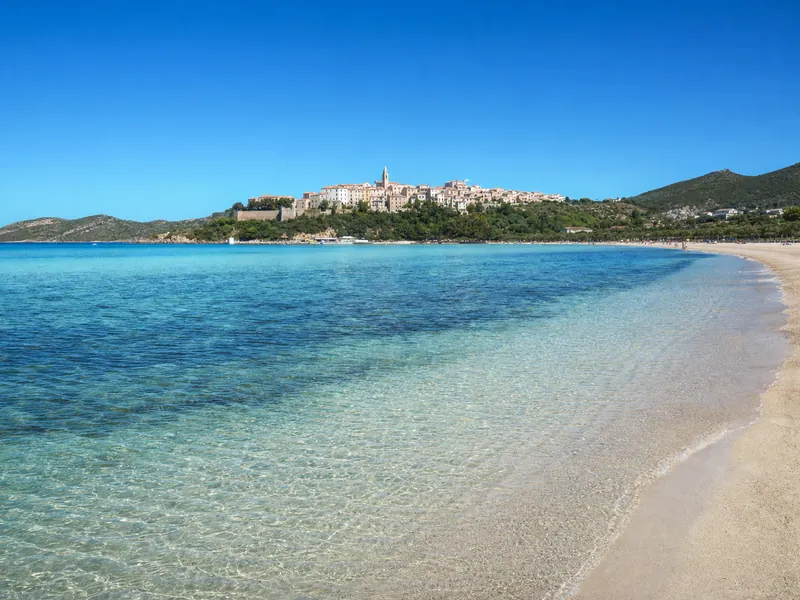
Number one if there is a small child in the party and seventh if there is not, which is a verdict rather than a hedge. It is the largest sand beach in the country and it shelves so gradually that a toddler can be a long way out and still upright, and that is precisely what makes it thin swimming for an adult: you wade, and wade, and the depth never arrives. It also fills fast once the season is running.
-
08
Paradise Bay
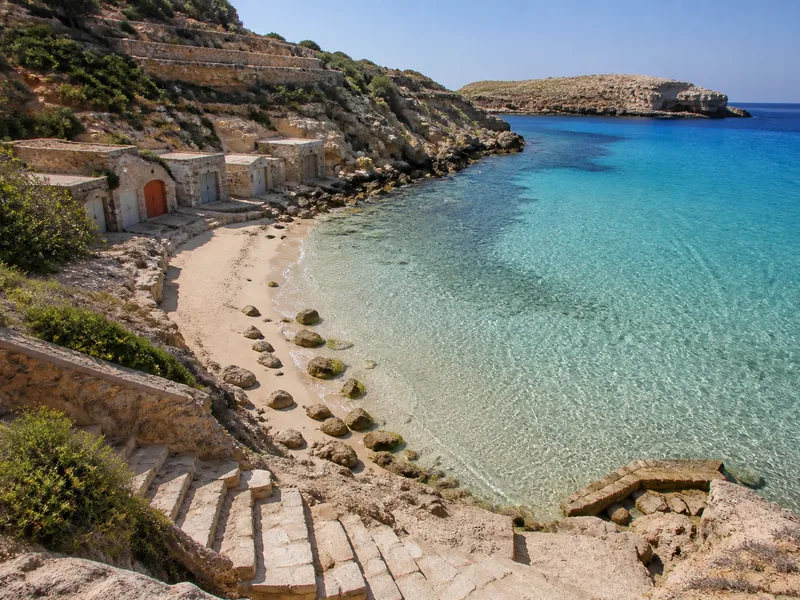
Small, and everything about the experience follows from that. A pocket of sand near the Ċirkewwa ferry terminal, down a flight of steps, with sheltered and usually calm water waiting at the bottom. On a quiet morning it is a delight. On a busy afternoon there is simply nowhere to put yourself, and that is why somewhere this pleasant finishes only eighth.
-
09
Wied iż-Żurrieq
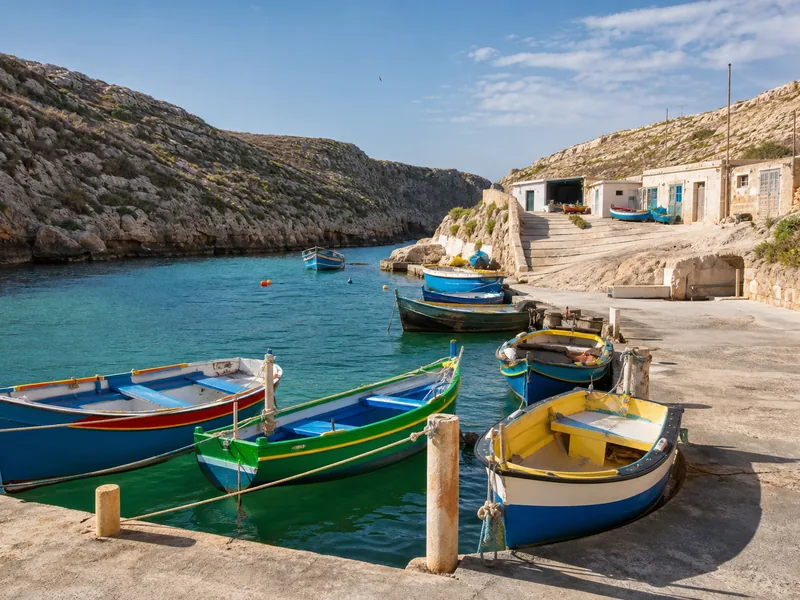
Not a beach day. A swim you fit around something else. The Blue Grotto boats go out from this inlet, and in the gaps between departures the water in it is deep enough to swim properly and to jump into, off rock rather than off sand. Worth an hour when you are already down there. Not worth the drive on its own.
-
10
Fomm ir-Riħ
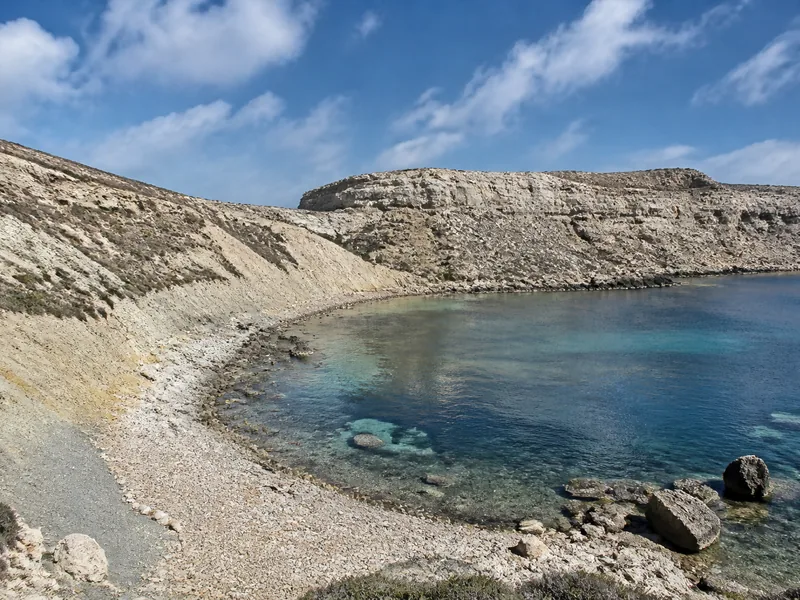
Last, and not because the water is poor. It is shingle rather than sand, set in behind cliffs, reached by a steep path down, and it is among the hardest places to get to anywhere on Malta. It is exposed as well, which is why our own note on it says to avoid the place in any onshore wind. The number of days it works and the number of people it suits are both small, and a ranking about swimming is obliged to say so.
Sand or rock, and why rock often wins
Start with the ratio, because it decides the whole holiday. Malta has very few sand beaches and a great deal of rock coastline. Build a fortnight around sand and you have signed up for the same handful of bays as everybody else, on the same days, at the same hours. Getting into the sea off a rock platform is not a consolation prize on these islands. It is the ordinary way people swim here, right through the summer, and it is worth turning up equipped to do it.
What a platform gives you is sea instead of beach. Nobody is kicking grit into the water, so it tends to stay clear exactly where you are standing. People string out along a shelf rather than packing into a rectangle, so there is no towel border to negotiate. And depth arrives within a few strokes, which is what a swimmer wants and the precise opposite of what a paddling toddler wants. That reasoning comes from the shape of the two things rather than from anything we have measured, though it holds up on most days. St Peter's Pool, out past Marsaxlokk, is the plainest version of it on this list: a flat rock shelf, no facilities at all, and water you climb or jump into.
Sort the ten ranked above and the split is stark. Five entries are sand you could lie down on, and one of those five is really a pair of beaches sharing a headland. One is shingle. Three are rock, or have no shore worth the name at all, and two of those three finished in the top six, which is this section's whole argument in a single line. The Blue Lagoon is its own category: bright water over sand with barely any beach attached. Everything else around the coastline, the long stretches between the places that have names on lists, is stone, and there is usually nobody standing on it.
Two things to pack, neither of them expensive. Something on your feet you can walk into the water wearing, because rock is unkind to bare soles and climbing out is always harder than getting in. And your own shade, because a platform has none at all, and the bays that do have any get it from the cliffs standing behind them, so it arrives early or late rather than at midday. That is geometry rather than a survey we have run, and it argues for swimming at either end of the day, which happens to be when the bays are emptiest anyway.
The wind decides where you swim
Nothing rearranges a beach day here faster than the wind, and almost no list mentions it. Two names are worth carrying around. The majjistral is the prevailing summer wind and comes out of the north west. The grigal comes from the north east, and it is the one that shoves swell into bays facing north and east.
Everything after that follows from which way a bay is pointing, and we want to be straight about the fact that pointing is all we are reasoning from. We have taken no measurements and we are quoting nobody's buoy. A bay wide open to the north east takes a grigal square on: the water turns cloudy, the shore break starts pushing people about, and the gentle shelf that made it perfect for a four year old yesterday makes it the worst place on the island to bring one today. A bay tucked behind a headland, or looking the other way entirely, is having a different afternoon three miles off.
So the move is not to abandon the day, it is to cross the island, which on something this size is a short drive rather than a day's work. With a north easterly running, look south and look west: the southern inlets, and anything with high ground standing between it and the weather. With a hard north westerly the same logic runs in reverse and the north west bays are the ones to leave alone. Comino sits in a channel between two pieces of land, which shelters it from some directions and funnels the sea through it in others, and there the operators make the call before you do. If the crossing is running, the lagoon is usually swimmable. If it is genuinely rough, nobody takes you out at all, which is a blunt but effective filter.
Two habits that cost nothing. Look at the sea before you commit to driving to it, and if more than one coast is in view, compare them. And treat any beach at the bottom of a long descent as a decision you cannot cheaply undo, because Fomm ir-Riħ and San Blas both put a climb between you and the car, and the foot of a cliff is a miserable place to find out the water is unusable.
The same applies to anything that floats. Our own notes on the Blue Grotto say a real swell cancels the trip outright, and the boats there are not being cautious for the sake of it.
Last checked: 15 September 2026. This page is editorial judgement against the criteria stated at the top, not a measurement, so it moves only when our own view of a place changes, not with the season.